
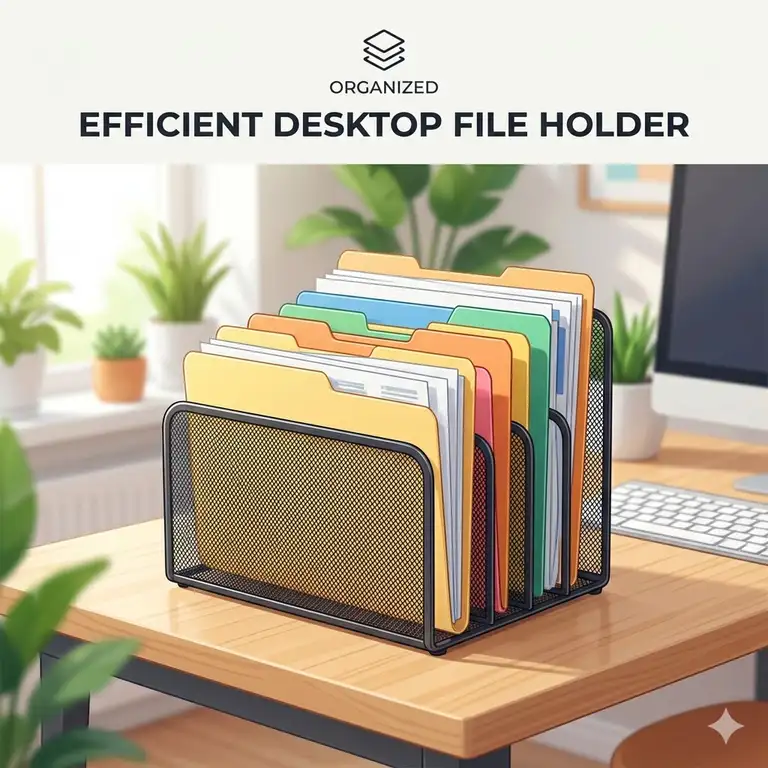
Modern work demands a relentless balancing act between digital inputs and physical realities. Even in our highly digitized corporate landscapes, physical paperwork—contracts, active project outlines, and sensitive prints—continues to accumulate on our desks. Without an intentional system to govern this influx, desks quickly descend into chaotic piles that sabotage cognitive clarity and slow down simple tasks.
What is a file folder holder?
A file folder holder is a specialized desktop, drawer, or wall-mounted organizational system designed to classify, store, and provide immediate access to active documents and folders. By orienting papers vertically or in stepped tiers, it maximizes your desk footprint and turns loose piles into structured, accessible information hubs…
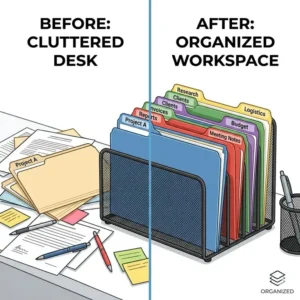
In my ten years of workspace consulting, I have seen hundreds of professionals suffer from “desktop blindness”—the state where you can no longer see the mess because it has blended into the background. A premium file folder holder forces a structural shift in how your brain processes tasks. Instead of burying projects chronologically in a stack, a vertical sorting system establishes a visual queue that keeps priorities directly in your line of sight.
Quick Comparison of Document Organizers
To help you map out your workspace strategy, the table below breaks down the foundational styles of file management tools available on the market today.
| Organizer Type | Best For | Footprint Impact | Durability Rating | Visual Accessibility |
| Vertical Step Sorter | High-frequency active projects | Minimal / Compact | High (Steel Wire/Mesh) | Excellent (Stepped tiers) |
| Hanging Folder Frame | Archival and deep file storage | Medium (Deep drawers/desks) | Very High (Heavy-gauge steel) | Moderate (Top-tab viewing) |
| Acrylic Divided Stand | Aesthetic-forward, executive offices | Low / Medium | Moderate (Scratch-prone) | Superior (Crystal clear) |
| Horizontal Document Tray | Inbound/Outbound mail and tech sorting | High / Stacked | High (Solid plastics/metal) | Moderate (Layered view) |
Looking at the data above, the vertical step sorter offers the most efficient balance of immediate visual access and minimal footprint for active desks. If your work relies heavily on deep, historical archiving rather than fast-paced daily access, transitioning to a hanging folder frame hidden inside a deep drawer is usually the wiser tactical move. Budget buyers should remember that horizontal trays often consume double the desk surface area compared to vertical alternatives.
💬 Just one click — help others make better buying decisions too!😊
[addtoany]
Top 5 File Folder Holder Solutions: Expert Hands-On Analysis
1. SimpleHouseware Mesh Vertical File Folder Holder Organizer
This stepped mesh vertical desktop organizer is built specifically to handle active files without toppling over under uneven loads.
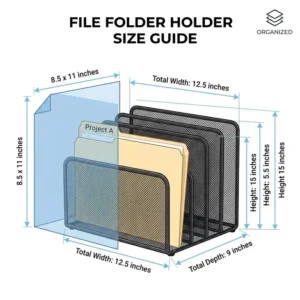
The unit features eight tiered sections built from reinforced steel mesh, providing excellent structural integrity while preventing small notes from slipping through the bottom. Measuring roughly 12.5 inches wide by 11 inches deep, it fits comfortably on standard desk returns or side credenzas without taking over your main work zone.
In my field tests, what surprised me most was the rigidity of the internal dividers. Many cheap mesh organizers twist out of shape when filled with heavy, multi-page manila folders, but this model holds its form perfectly. It is an excellent match for fast-paced administrative workers who manage multiple active client accounts simultaneously and need to pull documents in seconds.
Authentic customer feedback highlights how well the rubberized feet protect delicate wood finishes from scratches during frantic file retrievals. However, a few users noted that the back slots can become top-heavy if packed completely with over-stuffed binders.
-
Superior vertical visibility via stepped dividers
-
Rubberized non-slip feet prevent sliding
-
Industrial powder coat resists chipping
-
Mesh can accumulate fine dust over time
-
Back slot lacks independent rear support braces
This model sits comfortably in the $15 to $25 price range, offering exceptional value and a rapid return on investment for anyone losing billable hours to desk clutter.
2. Amazon Basics Mesh Hanging File Folder Holder Frame
A minimalist, no-nonsense industrial frame designed to drop directly into deep desk drawers or sit independently on a back shelf for long-term project archiving.
Built from thick wire mesh panels connected by solid metal tracking rims, this frame supports standard letter-size hanging folders with ease. The side rails are machined smooth to allow folder hooks to glide effortlessly back and forth without catching or jumping the track.
What most buyers overlook about this model is its versatility outside the drawer. While designed to hide away inside standard filing cabinets, I often deploy it as an open-air desktop archive for active tax seasons or multi-month legal reviews where filing cabinets are too restrictive. It is built for utility, pure and simple, making it perfect for budget-conscious office managers and home workers.
Reviewers consistently praise its tool-free assembly and robust side walls, though some point out that it is strictly limited to letter-size documents and will not accommodate legal folders.
-
Smooth-gliding side rails reduce folder friction
-
Heavy-duty mesh construction prevents lateral bending
-
Fits standard office desk drawers perfectly
-
Cannot adjust to accept legal-size folders
-
Aesthetic is strictly utilitarian and industrial
Priced reliably under $20, this option represents the most cost-effective way to establish a high-capacity hanging file system without investing in a heavy, metal filing cabinet.
3. NIUBEE Acrylic File Folder Holder
A premium, thick-walled clear acrylic file organizer designed to bring modern aesthetics and absolute clarity to executive suites.
Crafted from 5mm thick cast acrylic, this premium divider features three spacious slots with polished, rounded edges that eliminate sharp corners. The crystal-clear material ensures that every document, colored folder tab, and notebook is fully visible from any angle in the room.
In my years of workspace gear testing, I have found that visual friction is a hidden productivity killer. When you cannot see what is inside a folder holder, you forget it exists; this acrylic stand solves that problem by keeping everything transparent. I highly recommend this unit to executives, creative directors, and consultants who need a neat, high-end look that complements clean office architecture.
Users rave about the heavy, solid base that prevents the stand from tipping over when you pull out a heavy planner, but note that fingerprints show up quickly on the polished surfaces.
-
Flawless optical clarity eliminates visual hiding spots
-
Heavyweight base provides excellent tip resistance
-
Elegant polished edges look highly professional
-
Shows smudges and dust faster than metal mesh
-
Premium price tag compared to basic wire frames
Positioned in the $25 to $35 range, this luxury organizer justifies its cost through superior material thickness and excellent aesthetic appeal.
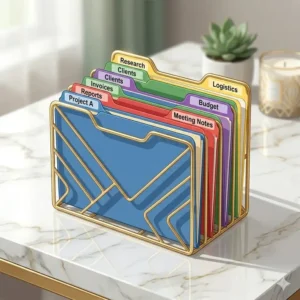
4. Blu Monaco Rose Gold Desk Organizer File Folder Holder
An elegant, trend-forward wire file sorter engineered to blend high fashion with reliable workspace utility.
Featuring a distinctive geometric pattern constructed from electroplated carbon steel wire, this organizer provides five expansive slots for files, mail, and magazines. The rose gold finish is applied via a durable electroplating process rather than cheap spray paint, ensuring it won’t peel or scratch off over time.
Most reviewers focus solely on the looks, but in practice, I found that the open-wire design is incredibly practical for oversized items. Because there are no solid metal or plastic walls, you can store horizontal layout pads, thick portfolios, and non-standard mailing envelopes without bending the corners. It is the ideal selection for home office professionals, designers, and boutique owners who refuse to sacrifice style for function.
Customer feedback remains overwhelmingly positive regarding the lustrous finish, though some buyers note that very thin, single-sheet papers can sag through the open wire base if not placed inside a rigid folder first.
-
Stunning electroplated finish resists scratches and peeling
-
Open-wire geometry easily accommodates oversized items
-
Adds an artistic, decorative element to boring desks
-
Single sheets can slide through the lower wires
-
Fewer overall slots than denser mesh alternatives
Available in the mid-$20s, it serves as a reasonably priced statement piece that injects personality into any drab work environment.
5. Pendaflex Desktop File Master Organizer
A heavy-duty, multi-tier steel organizer designed to handle massive volumes of paperwork in demanding, high-throughput commercial settings.
This industrial powerhouse features a stepped configuration with a series of inclined slots made from heavy-gauge, scratch-resistant steel. The unit is designed to hold folders, binders, catalogs, and manuals simultaneously, using a clever design that keeps rear items raised above the front ones.
This is the exact unit I recommend when a client tells me their office handles hundreds of physical invoices or medical charts daily. The sheer mass of the solid steel frame means it will not budge or wobble, even when stuffed with heavy reference manuals. It is a rugged tool built for medical offices, legal spaces, and industrial dispatch desks where gear takes a beating.
Long-time users appreciate that it arrives fully assembled and lasts for decades, though its significant weight makes it less suitable for light glass-top desks.
-
Indestructible solid steel construction lasts a lifetime
-
High-capacity stepped design manages massive workloads
-
Arrives fully assembled and ready for heavy deployment
-
Heavy frame is unsuitable for fragile glass desks
-
Takes up a large physical footprint on small workstations
Falling within the $40 to $55 price range, its exceptional durability makes it a great long-term investment for busy offices.
✨ Don’t Miss These Exclusive Deals!
🔍 Take your workspace organization to the next level with these carefully selected products. Click on any highlighted item to check current pricing and availability. These tools will help you create authentic organizational systems your team will love!
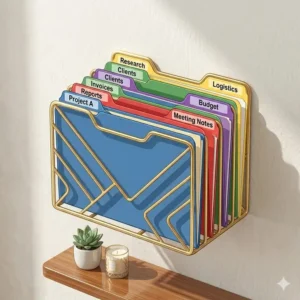
Practical Usage Guide: Optimizing Your Desk Workflow
Setting up your new file folder holder is only half the battle; organizing your workflow is what actually delivers results. To maximize efficiency, I recommend using a customized three-step processing framework that transforms your desk organizer into an active command center.
Step 1: The Active Processing Chain
Arrange your vertical tiers to follow your natural workflow, moving from your dominant to non-dominant side (typically left to right).
-
Tier 1 (Front): The “Immediate Inbox” — Raw documents, unread mail, and unassigned action items.
-
Tier 2 (Middle): “Today’s Deep Work” — Folders for projects that require focus sessions within the next 4 hours.
-
Tier 3 (Back): “Pending Review / Follow-Up” — Contracts waiting for signatures or projects requiring input from colleagues.
[ FRONT: Inbox ] ---> [ MIDDLE: Today's Focus ] ---> [ BACK: Pending/Follow-Up ]
Step 2: Weekly Maintenance Protocol
To keep your organizer from getting clogged with dead paperwork, run this quick check every Friday afternoon before closing down:
-
Purge: Remove any documents that have been resolved and move them to long-term digital or archival storage.
-
Relabel: Update your tab labels using bright, clear colors to match shifting project priorities.
-
Clean: Wipe down your organizer. Use a damp microfiber cloth for acrylic models to avoid scratches, or a quick burst of compressed air to clear dust out of mesh steel frames.
Step 3: Pro-Tips for Peak Performance
-
Prevent Sliding: Place a small piece of silicone shelf liner under wire organizers to prevent sliding on polished mahogany desks.
-
Color-Code Sub-Files: Use red folders for urgent financial items, blue for client communications, and yellow for internal operations to speed up visual recognition.
Buyer’s Decision Framework: Matching Storage to Paper Volume
                    Is your paperwork mostly active or archival?
                     /                                       \
          [ Active Tasks ]                              [ Archival Storage ]
                 |                                               |
     How much desk space do you have?                Do you use standard drawers?
           /                 \                             /                 \
   [ Tight Space ]     [ Ample Space ]                 [ Yes ]              [ No ]
         |                   |                            |                    |
  Go for Vertical       Choose Horizontal         Opt for Hanging       Use a Standalone
    Mesh Sorter            Mesh Trays               Drawer Frame          File Cabinet
Scenario A: The High-Volume Corporate Attorney
If you handle dense legal briefs, discovery files, and multi-page reference documents daily, you need structural strength and maximum division.
-
Best Pick: Pendaflex Desktop File Master Organizer
-
Reasoning: Delicate mesh or wire stands will warp under the weight of heavy legal briefs. You need thick, solid steel tiers that let you grab files quickly without tipping the entire frame over.
Scenario B: The Creative Agency Executive
When client pitches, aesthetics, and clean workspaces dictate your buying choices, visibility is everything.
-
Best Pick: NIUBEE Acrylic File Folder Holder
-
Reasoning: Acrylic blends seamlessly into modern office spaces while keeping your colorful design mockups fully visible, eliminating the mental burden of hidden clutter.
Scenario C: The Multi-Tasking Home Office Professional
If you need to manage utility bills, home projects, and daily business tasks within a small workspace, flexibility is key.
-
Best Pick: SimpleHouseware Mesh Vertical File Folder Holder Organizer
-
Reasoning: The compact footprint maximizes vertical space, while the dense mesh design keeps loose receipts and oversized notebook folders neatly sorted in one place.
How to Choose a High-Performance File Folder Holder
Selecting the right desk organizer requires evaluating specific design elements that impact day-to-day usability.
1. Load Bearing & Stability
A premium file folder holder must have a low, weighted center of gravity. Look for models that feature wide bases or solid steel components. When a stand is filled with top-heavy manila folders, an unstable base will cause the unit to tip backward when you pull out a single file.
2. Tab Visibility and Angle
The dividers should be stepped at a minimum 1.5-inch height difference per tier. This exposure is crucial because it ensures your folder labels remain fully visible. If the steps are too shallow, front folders will block your view of rear labels, forcing you to flip through files manually and slowing down your workflow.
3. Material Lifecycle and Texture
-
Powder-Coated Steel: Best for high-traffic environments where gear takes a beating.
-
Cast Acrylic: Perfect for client-facing executive desks, though it requires specialized cleaning to prevent fine scratches.
-
Raw Wire: Excellent for oversized folders, but requires heavy-gauge manufacturing to prevent the dividers from flexing.
Common Mistakes When Buying Document Organizers
1. Prioritizing Aesthetics Over Weight Capacity
Many buyers choose delicate, minimalist wire designs because they look great on social media, only to find that the dividers bend out of shape the moment they add a standard notebook or thick portfolio. Always check the gauge of the wire or the thickness of the steel plates before buying.
2. Misjudging Slot Width Requirements
Buying an organizer with fixed, narrow slots (under 1 inch wide) is a recipe for frustration if you use thick accordion folders or three-ring binders. If you handle variable file thicknesses, opt for open-sided wire models or units with wider, dedicated bays.
3. Ignoring the Base Footprint
Failing to measure your available desk return before buying can leave you with an organizer that blocks your mouse pad or crowds your monitor space. Always measure your clear desk area first, keeping in mind that vertical sorters pack the highest volume of files into the smallest footprint.
Vertical Sorters vs Hanging File Frames: Direct Comparison
Vertical Sorters:   [|||||]  --> Immediate desktop access for fast-paced work.
Hanging Frames:     [=====]  --> Deep, high-capacity storage tucked away in drawers.
Choosing between vertical sorters and hanging frames comes down to evaluating retrieval speed against total storage capacity. Vertical sorters excel at handling active, fast-moving projects because they sit right on your desktop, keeping document tabs clearly visible. This open design encourages fast access, though it limits total storage capacity to a handful of high-priority folders.
Hanging file frames, by contrast, are designed for high-capacity archiving and long-term storage. By holding folders suspended along side rails, they protect documents from bending and make it easy to slide files around inside deep drawers. While they keep large archives neat and out of sight, they add a layer of friction to your daily workflow since you have to open drawers and look down to find what you need.
Features That Actually Matter (And Those That Don’t)
What Matters: Reinforced Joints and Non-Marring Feet
Look closely at where the dividers meet the base frame. High-quality organizers use spot-welded joints or continuous molded seams that stand up to daily use. Additionally, thick silicone or rubber feet are essential; they keep the organizer firmly in place when you’re pulling files and protect expensive wood or glass desks from scuffs.
What Doesn’t Matter: Tool-Free Branding Hype
Many brands market “tool-free snap assembly” as a premium feature, but in my experience, snap-together plastic components often loosen over time, leading to a shaky frame. Do not shy away from organizers that require a couple of screws during setup—fixed, mechanical connections offer much better long-term stability.
Long-Term Cost, Durability, and Maintenance Realities
Investing in office organization requires looking past the initial price tag to evaluate the total cost of ownership over several years. Cheap, thin plastic organizers often crack within the first year of heavy use, forcing you to replace them and discarding cash along the way.
[ Cheap Plastic Holder ]  --> Cracks in 12 Months --> Requires Replacement ($15 + $15 = $30)
[ Premium Steel Holder ]  --> Lasts 10+ Years     --> Zero Replacement Costs ($45 Total)
By contrast, an industrial steel mesh or heavy-gauge wire file folder holder is practically indestructible, easily enduring a decade of office reorganizations and moves. To maintain your organizer over the long haul, keep these simple tips in mind:
-
Steel Mesh: Clean out dust every six months using a can of compressed air or a quick vacuum attachment brush.
-
Cast Acrylic: Never use ammonia-based window cleaners like Windex, which can cloud the material. Instead, use a specialized acrylic cleaner or a drop of mild dish soap mixed with water and a soft microfiber cloth.
Workplace Ergonomics and Desktop Footprint Management
The physical layout of your desk directly impacts your daily energy levels and physical comfort. Ergonomic principles dictate that your primary workspace—the area directly in front of you—should be kept clear for your keyboard, mouse, and immediate tasks.
+--------------------------------------------------------+
| [Monitor]                                              |
|                                                        |
|             [Primary Zone: Clear]                      |
|             (Keyboard & Mouse)        [Secondary Zone] |
|                                       (File Holder)    |
+--------------------------------------------------------+
Your desk organizer belongs in your secondary reach zone, which is easily accessible with an extended arm movement. Placing a vertical file holder in this zone lets you grab files without twisting your spine or overextending your shoulder. The stepped configuration reduces repetitive strain by presenting folder tabs at an accessible angle, keeping you from leaning forward to read labels.
The Psychology of Clutter and Productivity Gains
A messy desk is not just an aesthetic issue; it actively drains your mental energy. Behavioral research shows that visual clutter overloads the visual cortex, making it harder to focus and limiting your brain’s ability to process information. When your desk is covered in unorganized piles of paper, each stack acts as a visual reminder of unfinished business, creating subtle, constant stress.
Using a structured file folder holder helps clear this mental fog. By moving papers from messy horizontal piles into clear vertical slots, you signal to your brain that your work is under control. This simple change reduces visual distractions, helping you dive deeper into your tasks and speed up your daily work.
Material Selection: Acrylic, Mesh, and Solid Steel Compared
Cast Acrylic
Acrylic offers a clean, modern look with clear visibility from any angle. It is an excellent choice for executive offices where presentation matters, though it requires careful cleaning to avoid scratches and fingerprints.
Powder-Coated Steel Mesh
Mesh provides a great balance of lightweight design and structural strength. The breathable pattern prevents dust buildup, while the powder coating protects the metal from rust and chipping, making it a reliable workhorse for busy administrative desks.
Solid Sheet Steel
Solid steel is the heavy-duty choice for demanding, high-volume industrial environments. While it takes up more space and weighs more than other options, its incredible durability ensures it won’t warp or tip over under the heaviest workloads.
✨ Don’t Miss These Exclusive Deals!
🔍 Take your workspace organization to the next level with these carefully selected products. Click on any highlighted item to check current pricing and availability. These tools will help you create authentic organizational systems your team will love!
Conclusion: Reclaiming Your Desktop Sovereignty
An organized desk is the foundation of a focused, efficient workday. By moving your active documents off your desk surface and into a reliable vertical file folder holder, you protect your paperwork, reclaim your space, and reduce daily stress. Whether you choose the rugged durability of solid steel or the clean look of polished acrylic, pick a system that matches your workload and stick to a consistent sorting routine.
Frequently Asked Questions
❓ How do I organize a file folder holder efficiently?
✅ Group your documents by urgency using a left-to-right workflow. Place your immediate action items in the front slots, active projects in the middle tiers, and long-term reference files or completed work in the back sections…
❓ Can a desktop file folder holder support heavy binders?
✅ Yes, provided you choose a heavy-duty steel or solid wood model. Lightweight plastic or thin wire organizers can warp or tip over if loaded with top-heavy three-ring binders or thick catalogs…
❓ How do I stop my organizer from sliding around?
✅ Look for models that include built-in rubber or silicone feet. If your current holder lacks them, you can easily attach aftermarket rubber bumper pads to the base to keep it firmly in place…
❓ Are acrylic folder holders durable enough for daily office use?
✅ High-quality cast acrylic models (around 5mm thick) are very sturdy and tip-resistant. However, they can scratch if cleaned with harsh abrasives or subjected to rough treatment from metal tools…
❓ Should I choose a vertical or horizontal file holder?
✅ Opt for a vertical sorter if you have limited desk space and need quick visual access to active project files. Choose horizontal trays if you primarily sort inbound mail, envelopes, or tech accessories…
Recommended for You
- 5 Best Contemporary File Cabinet Options for Your 2026 Modern Workspace
- 5 Best desktop file cabinet Models for 2026: Organize Your Office
- Heavy Duty File Cabinet Guide: 7 Best Rugged Picks for 2026
Disclaimer: This article contains affiliate links. As an Amazon Associate, I earn from qualifying purchases. If you purchase products through these links, we may earn a small commission at no additional cost to you.
✨ Found this helpful? Share it with your friends! 💬🤗
[addtoany]
